Some tunnels don’t just take you to the past. Sometimes, they lead you to the people you were meant to meet.
There are films that dazzle with spectacle. Then there are films like The Tunnel to Summer, the Exit of Goodbyes—quiet, almost understated, yet leaving behind questions that stay with you long after the credits roll.
Set in a sleepy seaside town, the story follows Kaoru Touno, a boy burdened by the loss of his younger sister and the heaviness of family wounds. He stumbles upon the mysterious Urashima Tunnel, a place said to grant your deepest wish in exchange for time. For Touno, the tunnel is a chance to rewrite the past and finally fix what went wrong. But along the way, he meets Anzu Hanashiro, a classmate equally trapped—not by grief, but by fear and a sense of worthlessness.
Touno wanted to fix his past. Hanashiro wanted to survive her present. But somewhere along the way, they became each other’s answer.
At first, their journeys seem different. Touno is ready to lose everything to bring back the sister he couldn’t save. Hanashiro, on the other hand, only wants to escape a life that has caged her dreams. Yet, as they spend time together inside and outside the tunnel, something changes. Their regrets, though different, start to reflect one another. They find courage not in the tunnel’s promise, but in each other’s company.
By the film’s ending, when Touno chooses to walk away and chase what he believes is his greatest wish, it seems like their paths finally split. But the beauty of this story is how it reveals, quietly and without grand declarations, that their lives had already changed because of each other. The tunnel wasn’t the magic. Their bond was.
The movie reminds us that what we thought we wanted may not be what we needed all along. In trying to fix the past, Touno finds himself moving forward. And in learning how to stand by Touno, Hanashiro finally learns how to stand for herself.
Their goodbye is not a sad ending. It is, in many ways, the exit they both needed—to stop chasing what was lost and to start holding on to what they’ve found.
In cross-border prosecutions, the issue of how a suspect is brought before a court has long triggered debate. The doctrine of male captus bene detentus—which means wrongly captured but properly detained—stands for the proposition that once a person is before a competent court, the manner of their apprehension does not invalidate the court’s jurisdiction. While this principle has its critics, it remains a cornerstone of ICC practice, especially in light of the Court’s mandate to prosecute the gravest crimes of concern to the international community (Paulussen, 2010, pp. 839–962).
ICC Jurisprudence Affirms Jurisdiction Over Irregular Arrests
The ICC’s foundational ruling on this matter came in Prosecutor v. Thomas Lubanga Dyilo, where the accused questioned the legality of his arrest and transfer from the Democratic Republic of Congo. The Appeals Chamber of the ICC rejected the challenge, stating:
“The Appeals Chamber considers that the manner in which the person appears before the Court has no impact on the Court’s jurisdiction.”
“Any alleged violations… must be addressed under Article 21(3) or as an abuse of process under Article 64(4).” (Prosecutor v. Lubanga, ICC-01/04-01/06 OA4, 14 Dec 2006, paras. 36–39).
The Court did not dismiss the importance of due process. Instead, it underscored that unless the arrest involved violations so grave as to render a fair trial impossible, the proceedings must go on. This balancing of interests reaffirms the ICC’s primary duty: to deliver justice for crimes against humanity, genocide, and war crimes (Paulussen, 2010, pp. 839–875).
Rome Statute Safeguards Are Sufficient
Articles 21(3) and 64(4) of the Rome Statute provide necessary protections for the accused. As Paulussen notes, Article 21(3) requires that the application and interpretation of all law be consistent with internationally recognized human rights, ensuring that procedural safeguards remain in place (Paulussen, 2010, pp. 706–707). Meanwhile, Article 64(4) empowers the Trial Chamber to halt or correct any abuse of process if the trial’s fairness is at risk.
To further streamline cooperation, Article 59 restricts national courts to procedural review when executing ICC arrest requests (Paulussen, 2010, pp. 707–729). While some argue this limits individual rights, Paulussen explains that it is, in fact, a recognition that national courts are not venues for challenging the ICC’s jurisdiction, which is firmly established under international law.
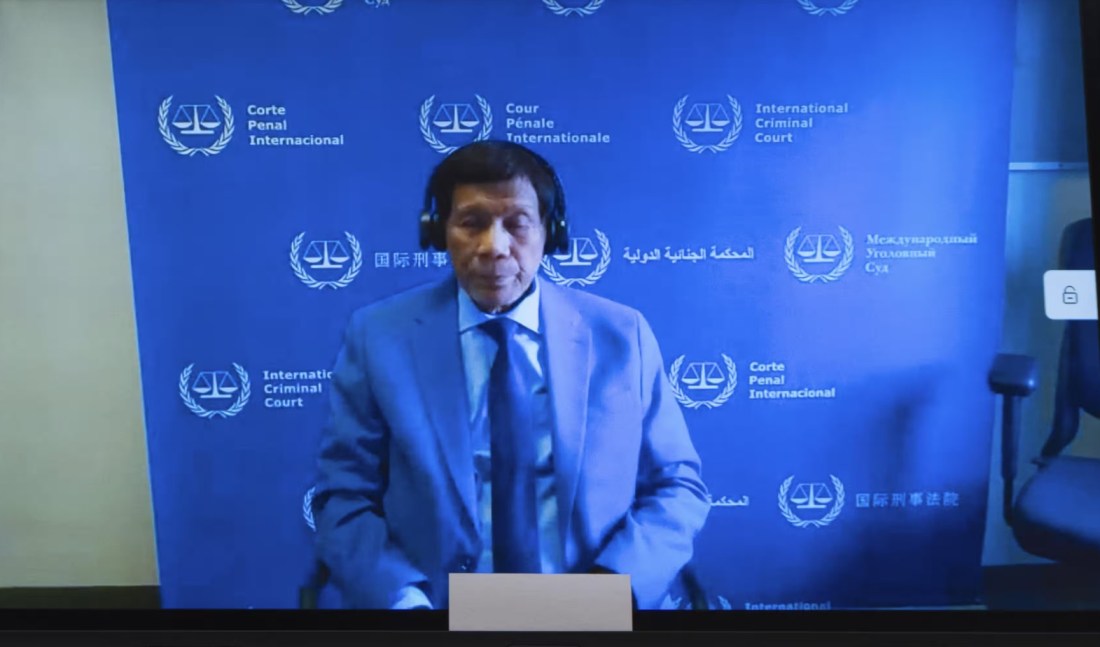
Source: GMA Integrated News (2025)
The ICC’s Functional Necessity of Male Captus
Unlike domestic courts, the ICC does not possess a police force. It relies on State cooperation to execute arrest warrants. As Paulussen points out, if jurisdiction were made to depend on the technicalities of arrest across different jurisdictions—with varying procedural standards—it would seriously undermine the ICC’s ability to prosecute even the most egregious crimes (Paulussen, 2010, pp. 872–874).
International criminal justice must not be derailed by procedural irregularities, particularly where such irregularities do not rise to the level of torture or egregious abuse. This approach is consistent with international jurisprudence, including Prosecutor v. Dragan Nikolić, where the Appeals Chamber held that jurisdiction should not be declined unless the arrest involved violations so serious as to compromise the integrity of the proceedings (ICTY, IT-94-2-AR73, 5 June 2003, para. 26).
In the Lubanga case, the Court reiterated that justice cannot be sacrificed at the altar of procedural perfection—especially when dealing with mass atrocities (Paulussen, 2010, p. 875).
Responding to Arguments Against the Doctrine
Recent scholarship by Dr. Chike B. Okosa argues for a more restrictive application of male captus bene detentus, particularly in light of human rights norms and the case of Nnamdi Kanu, whose extraordinary rendition from Kenya to Nigeria bypassed all formal legal procedures (Okosa, 2023, pp. 24–43). While his position reflects growing concern for sovereignty and due process, it must be weighed against the imperative to prosecute core international crimes.
Even in ICTR Prosecutor v. Barayagwiza, the stay of proceedings was triggered not by irregular arrest alone but by prolonged detention, inaction, and serious prosecutorial misconduct (ICTR-97-19-AR72, 3 November 1999, para. 76). Paulussen notes that such rulings remain exceptions rather than the rule, and that the ICC jurisprudence has never yet declined jurisdiction solely due to procedural irregularities (Paulussen, 2010, pp. 975–977).
As such, the doctrine remains valid and is carefully applied to uphold trial fairness without derailing justice for the most serious international crimes.
Source: NBC News (PDP – AFP / Getty Images)
Relevance to the Philippines and Regional Justice
In light of the ICC’s preliminary examination of alleged crimes in the Philippines, some have argued that the country’s withdrawal from the Rome Statute protects it from jurisdiction. However, as Paulussen and other legal scholars affirm, the ICC retains jurisdiction over crimes committed while the State was a Party to the Statute (Paulussen, 2010, pp. 665–667).
Furthermore, as in Lubanga and other ICC precedents, any challenge to arrest procedures will not divest the Court of jurisdiction unless it can be shown that the violations rise to the level of grave abuse of process, thus undermining fair trial standards (Paulussen, 2010, pp. 870–873).
This means that in current and future ICC proceedings, irregular arrest procedures alone—without more—are unlikely to prevent prosecution, particularly when weighed against the gravity of the alleged offenses.
References:
Prosecutor v. Thomas Lubanga Dyilo, ICC-01/04-01/06 OA4, Judgment on the Defence Challenge to the Jurisdiction of the Court, 14 December 2006.
Prosecutor v. Dragan Nikolić, ICTY Appeal Chamber Decision on Interlocutory Appeal Concerning Legality of Arrest, IT-94-2-AR73, 5 June 2003.
Rome Statute of the International Criminal Court, 17 July 1998, arts. 21(3), 64(4), and 59.
Okosa, C. B., “Illegal Extra-Territorial Abductions and Reconceptualising Mala Captus, Bene Detentus,” De Juriscope Law Journal, Vol. 3, No. 1 (2023).
Charter of the United Nations, 24 October 1945, art. 51.
UNSC Res. 1593, UN Doc. S/RES/1593 (2005).
Paulussen, C., Male Captus Bene Detentus? Surrendering Suspects to the International Criminal Court, Tilburg University, 2010.








 KJSD
KJSD 